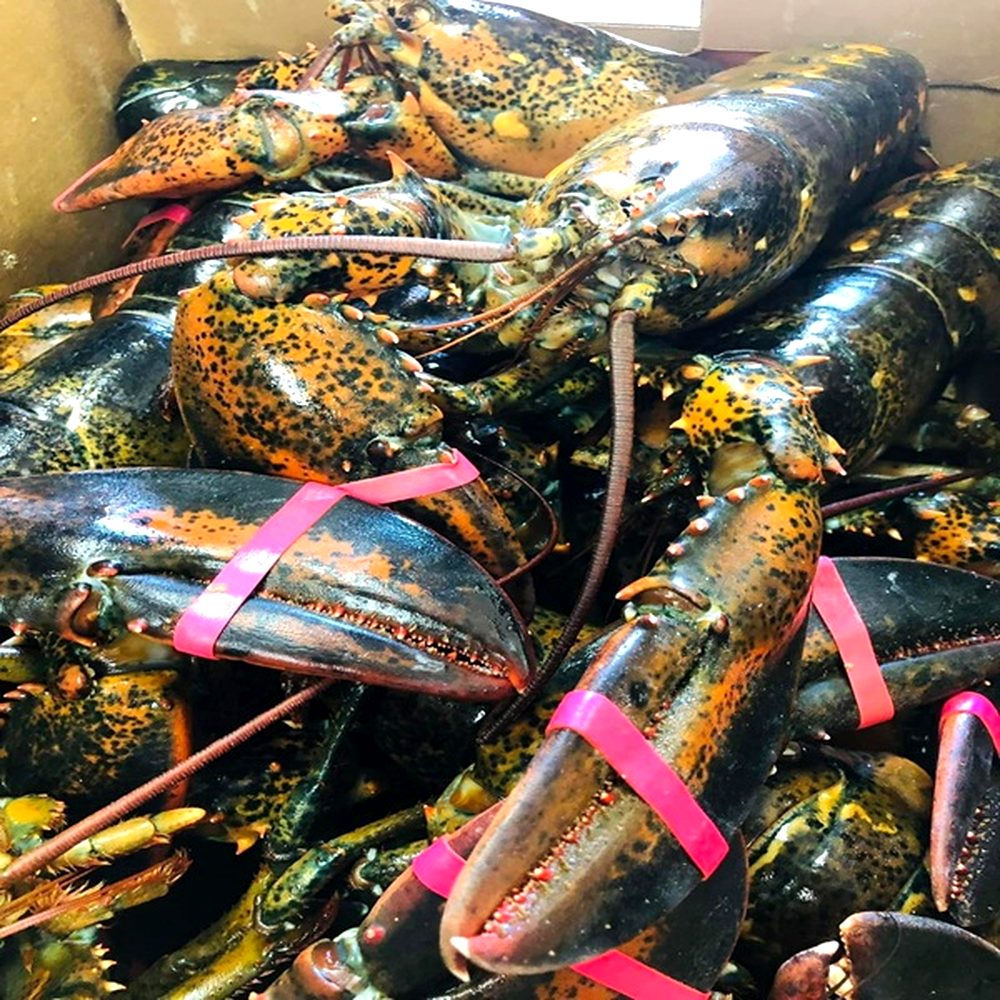
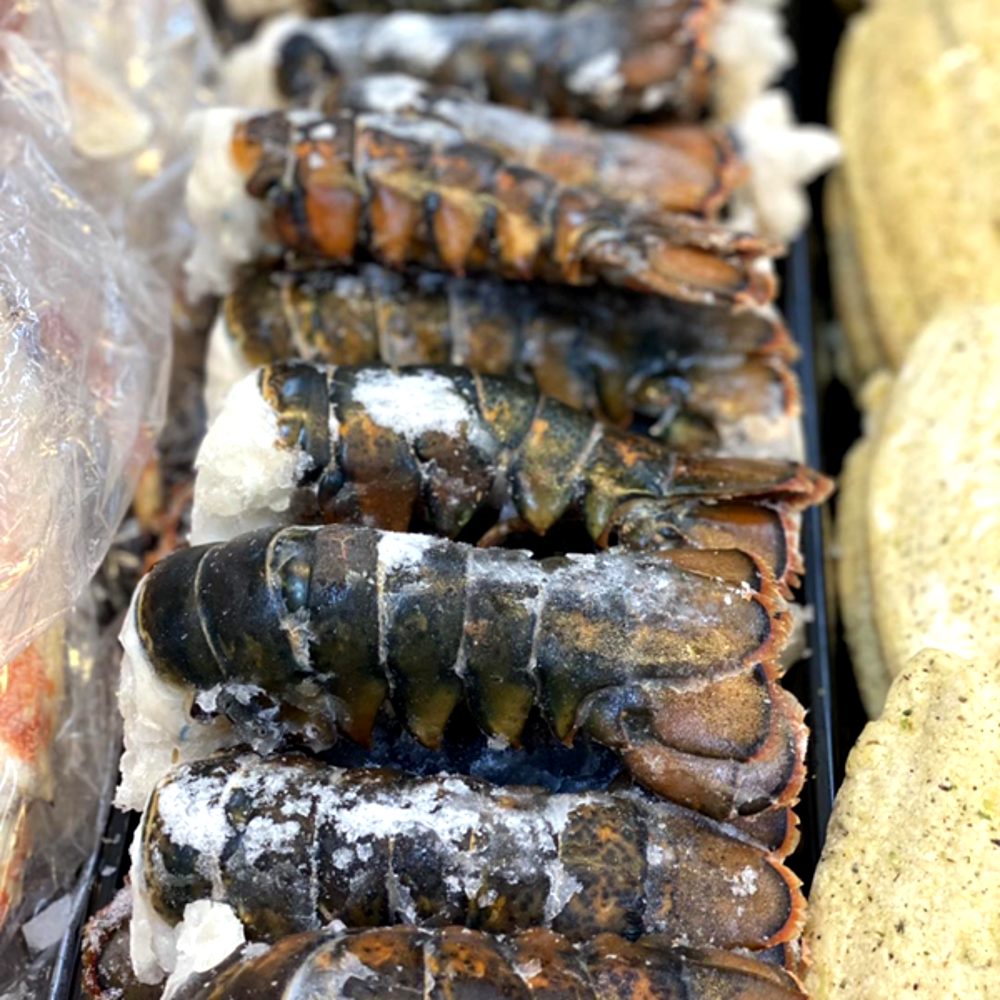
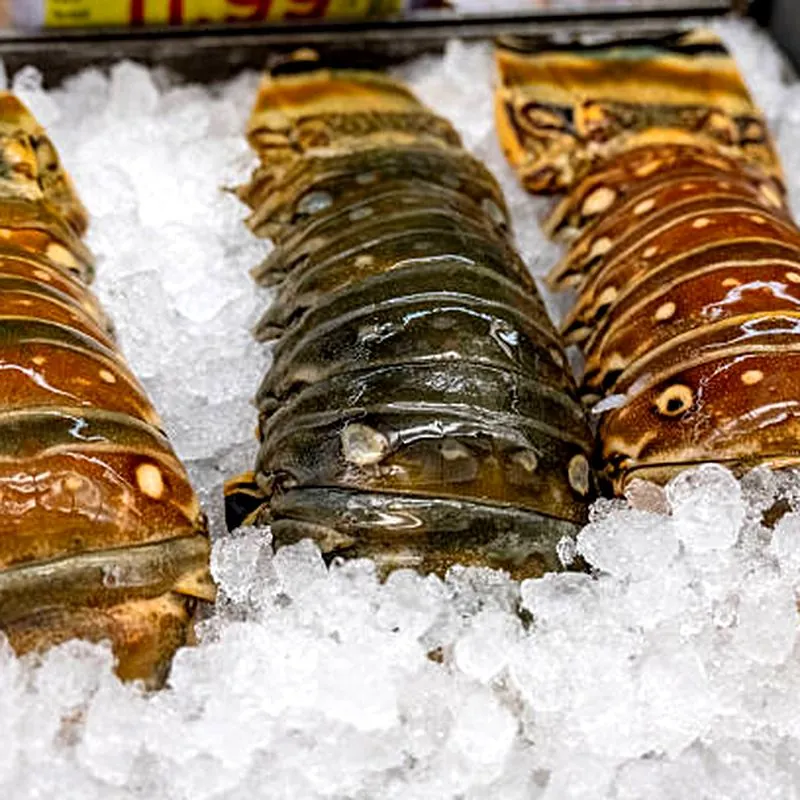
Frozen lobster provides importers, distributors, supermarkets, restaurants, hotels, and foodservice companies with greater flexibility for storage, inventory planning, and international transportation. Compared with live lobster, frozen seafood products can be stored for longer periods. under appropriate conditions and are well suited to buyers purchasing larger quantities or supplying markets where live seafood logistics are less practical.
Fresh Seafood Supply offers frozen whole lobster and frozen lobster tails in different commercial sizes and specifications, subject to availability and buyer requirements.
Frozen whole lobster allows buyers to offer the complete product while avoiding many of the logistical requirements associated with transporting live lobster. It can be suitable for seafood distributors, retailers, restaurants, hotels, catering businesses, and other foodservice operations.
Depending on the product and processing specification, whole lobster may be individually frozen and packed to protect it during frozen storage and international transportation.
When requesting a quotation, buyers should specify the required species, size or weight range, quantity, packaging, destination, and any particular processing requirements.
Frozen lobster tails are a popular commercial format because they provide a convenient, portion-controlled product for retail and foodservice applications. They are particularly suitable for supermarkets, restaurants, hotels, caterers, seafood distributors, and buyers that do not require whole lobster.
Depending on species and availability, commercial tail sizes may include:
Buyers should confirm whether sizing is based on individual tail weight and verify the exact specification before ordering.
Individually Quick Frozen (IQF) processing allows lobster products to be frozen separately rather than as one solid block. This can make individual products easier to handle, portion, store, and distribute.
For wholesale buyers, IQF formats can provide greater inventory flexibility because individual lobster tails or products can be removed from storage as required without thawing an entire block.
Buyers should confirm the freezing method, net weight, glazing where applicable, packaging format, production information, and required storage conditions before placing an order.
Frozen lobster can be particularly useful for businesses that require predictable inventory and longer storage periods. Buyers can purchase larger quantities, maintain frozen stock, and distribute products according to customer demand rather than depending entirely on frequent live shipments.
Frozen products can also provide more transportation options for international buyers. Depending on shipment volume and destination, orders may be transported by air cargo or temperature-controlled sea freight.
Maintaining the frozen cold chain remains essential. Appropriate packing, frozen storage, and temperature-controlled transportation help protect product condition from processing through delivery to the buyer.
Lobster species, size, product form, and processing specifications can significantly affect wholesale pricing and suitability for different markets. Importers should therefore provide clear requirements when requesting a quotation rather than comparing offers based only on price per kilogram.
Restaurants and hotels may require consistent individual sizes for menu portions and presentation, while distributors and supermarkets may need several size ranges to serve different customer segments and price points.
Live American/Boston and European lobster are generally traded according to individual weight ranges. Depending on species and current availability, commercial specifications may include:
Buyers should specify the preferred weight range and quantity required for each size. If more than one size is acceptable, this can also be communicated when requesting availability and pricing.
Consistent grading is particularly important for foodservice customers because individual lobster weight affects portion size, menu pricing, and expected yield.
Frozen lobster tails are commonly sold according to individual tail weight. Commercial sizes can include:
Available sizes depend on the lobster species, production, and current supply. Buyers should confirm how the supplier defines each size category and whether any weight tolerance applies.
For larger orders, it is also important to specify how much of each tail size is required rather than requesting mixed sizes without an agreed specification.
Size is only one part of the specification. Buyers should also confirm the species, product condition, processing method, and quality requirements.
For live lobster, this can include requirements relating to shell condition, activity, grading, and general condition before packing. For frozen products, buyers may need to confirm whether the product is whole or tails, the freezing method, packaging, net weight, and glazing where applicable.
Specifications should be agreed before shipment so both buyer and supplier have the same understanding of the product being purchased.
When requesting a wholesale lobster quotation, provide as much of the following information as possible:
Providing a complete specification helps us check the appropriate product, availability, packing requirements, and shipping options before preparing your quotation.
Proper packing and temperature control are critical when shipping lobster internationally. Live and frozen lobster require different handling methods, but both depend on carefully managed conditions from preparation and packing through transportation and delivery.
Fresh Seafood Supply coordinates lobster packing and cold-chain logistics according to the product, shipment quantity, destination, and expected transit time. Our objective is to protect product quality, reduce unnecessary handling risks, and ensure shipments are prepared appropriately for international transportation.
Before export, live lobsters are carefully handled, graded, and checked for condition. Controlled holding and purging can be used before shipment to prepare strong, healthy lobsters for transportation.
Packing is designed to minimize unnecessary movement and stress while maintaining suitable conditions during transit. Depending on the species, shipment duration, and packing system, temperature management, moisture control, insulation, and oxygen requirements are considered when preparing the shipment.
Particular attention is given to packing density. Overpacking can place unnecessary pressure on the lobsters, while inefficient packing can increase freight costs. The packing configuration therefore needs to balance product protection with practical international transportation requirements.
Live lobster must be kept within suitable temperature conditions throughout transportation. Insulated export packaging and appropriate cooling materials are used according to the species, route, season, and expected transit time.
Temperature management is equally important for frozen lobster. Frozen whole lobster and lobster tails must remain under an uninterrupted frozen cold chain during storage and transportation to protect product condition.
Buyers should ensure that suitable temperature-controlled storage and transportation are also available after the shipment reaches the destination.
Our frozen seafood products are packed using food-grade materials suitable for frozen storage and international transportation. Frozen l. Depending on the product specification, this can include individual packing, food-grade liners, vacuum packaging, IQF formats, and export cartons.
Wholesale buyers should confirm the net weight per carton, number of units where applicable, freezing method, glazing where applicable, labeling requirements, and pallet configuration before shipment.
For larger orders, pallet dimensions, carton quantities, gross weight, and loading configuration should also be considered when planning freight and cold-storage capacity.
Cold-chain management continues after the product leaves the packing facility. Temperature conditions must be maintained during cargo handling, airport or port operations, international transportation, customs clearance, local transportation, and delivery to the buyer's facility.
For live shipments, unnecessary delays can increase stress and affect survival. For frozen shipments, temperature fluctuations can compromise product condition and storage performance.
Careful coordination between the supplier, freight forwarder, carrier, importer, customs broker, and receiving facility helps reduce delays and maintain appropriate handling conditions throughout the journey.
Professional packing and logistics coordination can help reduce mortality in live shipments and protect the condition of frozen products. For wholesale buyers, this can mean fewer product losses, fewer customer complaints, and greater consistency when supplying restaurants, retailers, hotels, and seafood distributors.
Because every shipment has different requirements, packing and transportation arrangements should be confirmed according to the lobster species, product format, quantity, destination, transit time, and applicable import requirements.
Air freight is generally the preferred transportation method for international live lobster shipments because transit time needs to be kept as short and predictable as possible. Careful coordination between packing, airline schedules, cargo handling, customs clearance, and final delivery is essential when transporting live seafood over long distances.
Fresh Seafood Supply coordinates air-cargo options for live lobster shipments according to the buyer's destination, order quantity, available routes, and required delivery schedule.
Unlike frozen lobster, live lobster cannot simply remain in storage during extended transportation. The shipment must reach the destination while the lobsters remain alive and in suitable commercial condition.
Air freight significantly reduces international transit time compared with sea transportation and makes it possible to supply live lobster to restaurants, hotels, seafood markets, importers, and distributors in distant markets.
Flight schedules and routing still matter. Direct or efficient connections are generally preferable because additional transfers and extended cargo handling can increase total transit time.
Live lobster shipments are prepared using insulated packaging designed for seafood transportation. Packing methods are selected according to lobster species, size, shipment duration, season, destination, and airline requirements.
Temperature management, moisture control, packing density, ventilation or oxygen requirements where applicable, and protection against excessive movement are considered when preparing live lobster for transportation.
The objective is to minimize stress and maintain suitable conditions from packing through arrival.
Live seafood is time-sensitive cargo. Shipment schedules should therefore be coordinated carefully so packed lobster does not remain unnecessarily long at cargo terminals or during connections.
Buyers should consider not only the scheduled flight duration but the total transit time from packing at origin until the lobster reaches the receiving facility.
Customs and veterinary or food-import clearance at destination can also affect this timeframe. Importers should ensure that permits, documentation, customs arrangements, and suitable onward transportation are prepared before the shipment arrives.
To calculate suitable air-freight options, buyers should provide:
Providing the destination airport is particularly important because cargo availability, airline routes, transit times, and freight rates can vary significantly between airports.
When requesting live lobster prices, buyers should clarify whether they require a product-only quotation or a delivered freight quotation.
A delivered quotation may involve the lobster price together with packing, inland transportation, air freight, cargo handling, and other applicable charges depending on the agreed shipping terms. Destination customs clearance, duties, taxes, and local delivery may or may not be included.
Buyers should therefore confirm exactly what is included before comparing quotations from different suppliers.
Successful live lobster imports depend on coordination at both origin and destination. Before confirming an order, buyers should ensure they have appropriate import arrangements, fast customs clearance, suitable transportation from the airport, and facilities capable of receiving and maintaining live lobster.
Planning these details in advance helps reduce unnecessary delays and supports better survival and product condition when the shipment reaches the buyer.
International lobster shipments require accurate documentation and careful coordination between the supplier, freight forwarder, carrier, importer, customs broker, and relevant authorities. Missing or incorrect documents can delay customs clearance, increase storage or handling costs, and create unnecessary risks for temperature-sensitive seafood.
Fresh Seafood Supply supports international buyers with the commercial and export documentation required for lobster shipments, based on the product, destination, transportation method, and applicable import requirements.
The commercial invoice provides key information about the transaction, including the buyer and seller, product description, quantity, unit price, total value, currency, country of origin, and agreed shipping terms.
The packing list provides additional details about the physical shipment. Depending on the order, this can include the number of cartons, net and gross weight, lobster sizes or specifications, packaging information, and pallet details.
Information across these documents should be consistent with the actual goods being shipped.
Live and frozen lobster shipments may require official health or sanitary certification depending on the destination country and applicable seafood import regulations.
The required certificate can vary according to the lobster species, product form, country of origin, and importing market. Buyers should therefore confirm their destination's current requirements before shipment so the necessary documentation can be prepared correctly.
A certificate or declaration of origin may be required for customs clearance, trade requirements, buyer documentation, or other import procedures.
Where applicable, origin documentation identifies the country from which the product originates. Buyers should confirm whether a specific format or certification procedure is required by their destination country.
For live lobster transported by air, the shipment will normally be accompanied by an Air Waybill (AWB) containing important information about the cargo, routing, shipper, consignee, and airline transportation.
Frozen lobster shipped by sea will generally use a Bill of Lading (B/L) or another applicable sea-transport document.
Buyers should ensure that consignee information and other important shipment details are correct before documents are finalized.
Import regulations are not identical in every country. Depending on the destination, additional requirements may include import permits, veterinary or food-safety controls, product registration, labeling requirements, customs documentation, inspections, or other certificates.
The importer is responsible for confirming applicable local import requirements before ordering. Providing these requirements to the supplier early helps ensure that necessary documentation and shipment arrangements can be coordinated before dispatch.
Our export support covers coordination of the commercial and shipping documentation required for the agreed lobster shipment. Buyers should provide accurate company details, consignee information, destination, product requirements, and any destination-specific documentation instructions when placing an order.
Preparing documentation before dispatch is particularly important for live lobster because unnecessary customs or cargo delays can affect product condition. For frozen lobster, efficient clearance also helps maintain the cold chain and avoid unnecessary storage and handling charges.
Clear communication between buyer, supplier, freight forwarder, and customs representatives helps make international lobster shipments more predictable and reduces the risk of avoidable documentation problems.
Fresh Seafood Supply supports commercial buyers requiring bulk quantities of live and frozen lobster for distribution, retail, hospitality, and foodservice markets. We work with importers, seafood distributors, wholesalers, supermarkets, restaurants, hotels, and other professional buyers with different product and volume requirements.
Whether you are testing a new market with an initial shipment or purchasing regularly for an established distribution program, lobster specifications and logistics can be coordinated according to your required species, size, product form, quantity, packaging, and destination.
Importers and distributors often require multiple lobster sizes or product formats to serve different customers. Depending on availability, orders can be prepared according to agreed commercial specifications for live whole lobster, frozen whole lobster, or frozen lobster tails.
For larger or recurring orders, buyers should provide expected purchasing volumes and preferred delivery schedules in advance. This helps with product planning, grading, packing, and transportation arrangements.
Restaurants, hotels, resorts, and hospitality groups often place greater importance on consistent individual sizes because lobster weight affects portion control, menu presentation, food cost, and selling price.
Live American/Boston and European lobster can serve premium dining and live-seafood programs, while frozen lobster tails provide greater storage flexibility for restaurants, hotels, catering operations, and other foodservice businesses.
Buyers should specify their preferred weight or tail-size range so quotations can be based on the product that best matches their menu and operational requirements.
Retail buyers may require frozen whole lobster, lobster tails, or other suitable formats that can be distributed through frozen seafood departments and retail channels.
Product consistency, packaging, labeling, net weight, storage requirements, and shelf-life information are important considerations for retail programs. Private-label or customized packaging requirements should be discussed before ordering because they may affect minimum quantities, production schedules, and pricing.
New wholesale customers may choose to begin with a trial shipment to evaluate product quality, grading, packaging, documentation, logistics performance, and customer response before moving to larger volumes.
For established buyers, recurring supply programs can be planned according to expected demand and product availability. Providing forecasts or purchasing schedules can make it easier to coordinate regular shipments and maintain more consistent inventory.
Reliable wholesale supply requires more than completing a single shipment. Product specifications, communication, logistics planning, documentation, and consistency become increasingly important when buyers are purchasing repeatedly.
Our goal is to develop long-term relationships with professional seafood buyers by understanding their market requirements and coordinating lobster supply according to agreed specifications. As purchasing volumes grow, supply arrangements can be reviewed to support changing product, packaging, and delivery requirements.
Choosing between live and frozen lobster depends on your customers, destination, transportation options, storage facilities, order volume, and distribution model. Both formats have commercial advantages, but they require different approaches to handling, logistics, inventory management, and sales.
For wholesale buyers, the right choice is usually the product that best matches customer demand while keeping transportation, storage, and product-loss risks under control.
Live lobster is particularly suitable for premium restaurants, hotels, resorts, live seafood markets, and distributors supplying customers that specifically require live product.
For these buyers, freshness and presentation can justify the additional logistics involved in maintaining live lobster. Customers may also be willing to pay a premium for lobster selected directly from a live holding system.
However, live lobster requires careful planning. Buyers need fast transportation, efficient customs clearance, suitable receiving procedures, and appropriate facilities for maintaining lobster after arrival.
Air freight costs and potential mortality should also be considered when calculating the true landed cost of live lobster.
Frozen lobster is generally more flexible for buyers that require longer storage, larger inventories, or distribution over wider geographic areas.
Frozen whole lobster and lobster tails can be stored under appropriate frozen conditions and distributed according to customer demand. This makes frozen products particularly useful for supermarkets, wholesalers, foodservice distributors, caterers, restaurants, and hotels that need predictable inventory.
Frozen lobster can also provide more transportation options. Depending on shipment volume and destination, buyers may use air cargo or temperature-controlled sea freight rather than relying exclusively on fast air transportation.
| Consideration | Live Lobster | Frozen Lobster |
|---|---|---|
| Product condition | Live | Frozen |
| Typical transport | Primarily air freight | Air or reefer sea freight |
| Transit sensitivity | Very high | Lower than live product |
| Storage flexibility | Limited | High |
| Inventory planning | Requires faster turnover | Easier for longer-term stock |
| Receiving requirements | Live seafood handling facilities | Frozen cold storage |
| Product-loss risk | Mortality can occur | No live mortality risk |
| Common buyers | Premium restaurants, hotels, live seafood markets | Retailers, distributors, restaurants, foodservice |
| Best suited for | Markets specifically demanding live lobster | Markets prioritizing storage and distribution flexibility |
Buyers should avoid comparing live and frozen lobster based only on the supplier's price per kilogram.
For live lobster, the landed cost may include specialized packing, air freight, cargo handling, customs clearance, local transportation, and potential mortality. Frozen products have their own costs, including freezing, packaging, frozen freight, destination handling, and cold storage.
The more useful comparison is therefore the usable product cost after delivery, together with the value each format provides in your particular market.
Importers and distributors do not necessarily have to choose only one format. Businesses serving several customer segments may carry both live and frozen lobster.
For example, live lobster can be supplied to premium restaurants and hotels, while frozen lobster tails can serve supermarkets, caterers, and customers requiring greater storage flexibility.
Offering both formats can allow a distributor to serve a broader customer base while reducing dependence on a single product category.
This section should explain pricing without locking you into a fixed number that may quickly become outdated.
Wholesale lobster prices depend on several variables, including species, size, product condition, processing format, order quantity, season, market availability, packaging, freight method, and destination.
Live American/Boston lobster, European lobster, Caribbean spiny lobster, frozen whole lobster, and frozen lobster tails can all be priced differently because each product has different sourcing, handling, packing, and transportation requirements.
Species is one of the first factors that affects price. American/Boston lobster, European lobster, and Caribbean spiny lobster serve different markets and are sourced under different supply conditions.
Product format also matters. Live whole lobster, frozen whole lobster, and frozen lobster tails involve different processing and logistics costs. Tail products may also be priced according to individual weight ranges rather than whole-lobster weight.
Lobster size can have a major impact on the wholesale price. Certain commercial sizes may attract stronger demand in restaurants, hotels, retail, or export markets.
For live lobster, buyers should specify the required individual weight range. For frozen tails, commercial sizes such as 3–4 oz, 4–5 oz, 5–6 oz, 6–8 oz, and larger sizes may be quoted separately.
Quality grade and product condition can also influence pricing.
Live lobster pricing includes the additional handling and logistics required to keep the product alive during transportation. Packing, air freight, routing, and shipment timing can represent a significant portion of the landed cost.
Frozen lobster provides more storage and shipping flexibility, but costs can still vary according to freezing method, packaging, glazing where applicable, carton configuration, cold storage, and transportation method.
The quantity ordered can affect both the product price and the freight cost per kilogram.
Smaller trial shipments may have higher logistics costs per kilogram, while larger orders can sometimes benefit from more efficient packing and transportation.
Importers should provide the expected order quantity when requesting a quotation so the supplier can calculate the most suitable product and shipping options.
Lobster prices can change according to season, fishing conditions, supply availability, demand, size distribution, and market conditions.
Because availability and prices can move over time, wholesale buyers should request a current quotation close to their intended purchasing date rather than relying on older price lists.
Transportation can have a major impact on the final cost, especially for live lobster shipped by air.
Freight rates depend on destination, airport or port, shipment weight and volume, airline or shipping capacity, routing, season, and available cargo space.
For this reason, a product-only price should not be directly compared with a delivered quotation unless the buyer understands exactly which costs are included.
The lowest price per kilogram is not always the lowest overall cost.
Buyers should consider product price, packing, freight, insurance where applicable, customs clearance, duties or taxes, destination handling, cold storage, local delivery, and potential product losses.
Comparing the total landed cost gives importers a more realistic understanding of the true cost of each shipment.
To receive an accurate wholesale lobster quotation, buyers should provide detailed purchasing and delivery requirements. The more information you provide at the beginning of your inquiry, the easier it is to check product availability, confirm suitable specifications, calculate packing requirements, and determine appropriate shipping options.
Fresh Seafood Supply can prepare quotations for live and frozen lobster based on your required species, size, quantity, product format, packaging, and destination.
Start by telling us exactly which product you require:
If you are interested in more than one product, list each product separately so availability and pricing can be provided accordingly.
For live lobster, specify the preferred individual weight range, such as:
For frozen lobster tails, specify your required tail size, such as 3–4 oz, 4–5 oz, 5–6 oz, 6–8 oz, or 8 oz and above.
If alternative sizes are acceptable, mention this in your inquiry. It may provide additional options when checking current availability.
Provide the total quantity you intend to purchase.
For example:
For multiple sizes, indicate how much of each size you require.
Order quantity is important because it can affect product availability, packing configuration, and transportation costs.
If you have particular packaging requirements, include them in your inquiry.
For frozen products, this may include carton net weight, vacuum packaging, IQF requirements, glazing where applicable, labeling, or pallet requirements.
For live lobster, packing will be planned according to species, size, shipment quantity, destination, transit time, and transportation requirements.
Always provide your:
Destination country and preferred airport or seaport.
For live lobster shipments, the destination airport is particularly important because available airline routes, connections, cargo schedules, and freight rates can affect the shipping plan.
For frozen shipments, buyers can also indicate whether they prefer air freight or refrigerated sea freight where practical.
Buyers should clarify whether they require:
Product-only pricing — quotation for the lobster without international freight.
or
Delivered pricing — quotation including agreed transportation and related charges to a specified destination.
If requesting delivered pricing, provide the exact destination airport, seaport, or agreed delivery point so applicable logistics costs can be calculated.
Before sending your inquiry, include:
Species:
Live or frozen:
Whole or tails:
Required size:
Quantity:
Packaging requirements:
Destination country:
Airport/seaport:
Preferred shipping method:
Required delivery date:
Providing these details helps our export team prepare a more relevant quotation and reduces unnecessary back-and-forth before an order can be confirmed. When you're ready, request a wholesale lobster quote with your purchasing requirements and destination.
Fresh Seafood Supply supplies live and frozen lobster products for commercial buyers, including American/Boston lobster, European lobster, Caribbean spiny lobster, frozen whole lobster, and frozen lobster tails. Product availability, sizes, and specifications should be confirmed when requesting a quotation.
Depending on species and current availability, live lobster can be supplied in commercial weight ranges such as 400–600 g, 600–800 g, 800 g–1 kg, and 1 kg and above. Buyers should specify their preferred size and quantity when requesting pricing.
Frozen lobster tails may be available in sizes such as 3–4 oz, 4–5 oz, 5–6 oz, 6–8 oz, and 8 oz and above, depending on species and current supply. Buyers requiring particular size tolerances should include them in their specifications.
Yes. Live lobster can be shipped internationally using suitable air-freight routes. Shipment planning depends on the species, quantity, destination airport, available airline connections, transit time, packing requirements, and destination import regulations.
Live lobster is prepared and packed using insulated export packaging designed to maintain suitable conditions during transportation. Packing arrangements consider factors such as lobster species, size, temperature, moisture, packing density, transit time, and destination.
Yes. Frozen lobster can be suitable for temperature-controlled sea freight, particularly for larger commercial shipments where transit time, volume, destination, and cold-storage arrangements make refrigerated container transportation practical. Air cargo may also be used for frozen orders.
Minimum order quantities can vary according to the lobster species, live or frozen condition, size, product format, packaging, availability, and shipping method. Buyers should provide their required quantity so suitable supply and transportation options can be checked.
Depending on the shipment and destination, documentation can include a commercial invoice, packing list, health or sanitary certificate, certificate or declaration of origin where applicable, and an Air Waybill or Bill of Lading. Additional documentation may be required by the importing country.
Wholesale lobster prices vary according to species, size, live or frozen condition, product format, season, availability, quantity, packaging, and market conditions. International freight costs also vary according to destination and shipment size. Buyers should request a current quotation for accurate pricing.
Yes. Buyers requesting a delivered quotation should provide the required lobster product, size, quantity, destination country, and preferred airport or seaport. This allows available transportation options and applicable freight costs to be calculated.
Send your required species, live or frozen condition, whole or tails, size, quantity, packaging requirements, destination country, airport or seaport, and preferred delivery schedule. We can then review availability and prepare a quotation based on your requirements. You can contact our export team with these details to request current availability and pricing.
Fresh Seafood Supply works with importers, distributors, supermarkets, restaurants, hotels, and foodservice buyers looking for dependable live and frozen lobster supply for international markets.
Whether you require live American/Boston lobster, European lobster, Caribbean spiny lobster, frozen whole lobster, or frozen lobster tails, our export team can help you identify suitable products based on your required species, size, quantity, packaging, and destination.
From product selection and grading to professional packing, cold-chain management, air or sea freight coordination, and export documentation, we provide the support needed to simplify international lobster sourcing and help protect product quality throughout the supply chain.
For an accurate quotation, send us your lobster species, live or frozen condition, required size, quantity, packaging requirements, destination country, and preferred airport or seaport.